How LMS Is Shaping the Future of Digital Learning in Higher Education
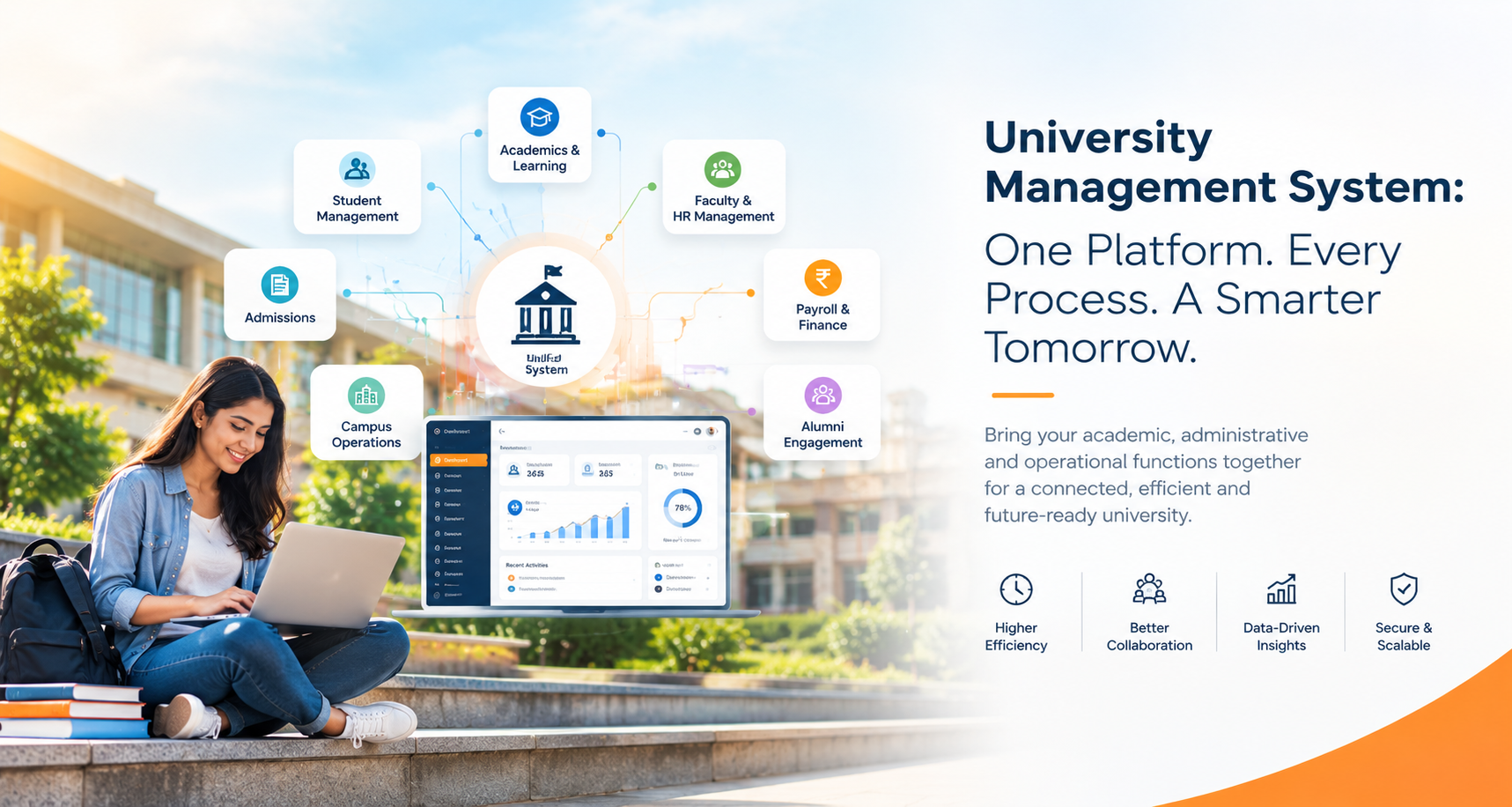
Today, universities manage far more than classrooms and examinations. From admissions and student records to faculty management, examinations, payroll, learning delivery and alumni engagement, every function generates data and requires coordinated processes. Managing these operations through disconnected tools and manual workflows can lead to duplication, delays and limited visibility.
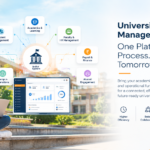
A modern university management system brings these functions together on a centralized digital platform, helping institutions streamline operations, improve collaboration and make informed decisions.
A university management system is an integrated digital platform designed to manage the academic, administrative and operational activities of a higher education institution. Instead of relying on separate applications for admissions, attendance, examinations, HR, payroll and student management, universities can bring these functions together through a unified ecosystem.
Modern university management system software can connect administrators, faculty, students, staff and other stakeholders while providing centralized access to institutional data. For universities looking to modernize their operations, the right technology should not simply digitize individual processes. It should connect them.
Higher education institutions operate through interconnected processes. An admission record eventually becomes a student profile, which connects to attendance, academics, examinations, fees and eventually alumni engagement.
When these functions operate independently, institutions may face
Integrated university solutions address these challenges by creating a connected environment where information can move seamlessly between relevant functions.
A comprehensive university management software platform should support the complete student and institutional lifecycle rather than focusing on a single department.
Admissions are often the first major interaction between a student and an institution. An integrated admission management system can streamline application processing, admission workflows, document management, center management and enrollment.
Centralized admission data also reduces repetitive work and provides administrators with better visibility into applications and enrollments.
Student information is at the heart of university administration. A centralized system can maintain student profiles, academic information, course details, attendance, examination records and other relevant data in one place.
This creates a consistent source of information for authorized users across departments.
Attendance management becomes more efficient when it is integrated with the broader academic ecosystem. A university attendance system can help faculty record and monitor attendance while allowing students to view their attendance information.
When connected with academic and student management modules, attendance data can become part of a broader view of student engagement and academic progress.
Universities conduct examinations across multiple programs, departments and centers. A digital examination module can support exam planning, center management, assessment workflows, result processing and academic documentation.
Automation can reduce manual intervention and improve consistency throughout the examination lifecycle.
Teaching and administration are increasingly connected. Integrated learning management solutions allow universities to extend their digital ecosystem beyond administrative functions.
Faculty can manage academic content, syllabus planning, assignments and learning activities, while students can access relevant academic resources and monitor their progress. An integrated approach also reduces the need to maintain disconnected academic and administrative systems.
University operations depend heavily on faculty and administrative staff. Managing employee information, roles, attendance, leave and other HR processes through a centralized platform can simplify administrative workflows.
An employee payroll management system can further automate salary processing and related payroll activities, helping HR teams reduce repetitive administrative work and improve accuracy.
The relationship between a university and its students should not end at graduation. Alumni networks can contribute to mentorship, industry connections, events, placements and institutional engagement.
An integrated alumni CRM can help universities maintain alumni records, manage communication and build stronger long-term relationships with their alumni community.
Universities also need to manage resources and infrastructure beyond academic administration. A campus management system can bring together functions such as resource management, library operations, hostel administration, transportation and other campus services.
Connecting these functions to the central university platform provides administrators with a more complete view of institutional operations.
Implementing an integrated digital platform can provide universities with several operational advantages.
Choosing university management software is an institutional decision, not simply an IT purchase. Universities should evaluate whether the platform can adapt to their academic structure, administrative workflows and long-term digital strategy.
Key considerations include:
The most effective platform is one that fits the institution’s operational model while remaining flexible enough to evolve with changing requirements.
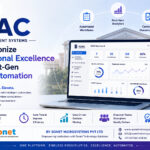
Sonet Microsystems‘ UNISCOP is designed as a cloud-based university ERP that brings multiple university operations together on a centralized platform. Its modules cover areas including university master setup, college affiliation, centralized admission, examinations, student management, staff management, HR and payroll, library, hostel, LMS, training and placement, alumni management, grievance and feedback management, and more.
The platform is designed to support different stakeholders across the university. Administrators can manage institutional operations from a centralized environment, faculty can handle academic activities and attendance, students can access academic information and services, while HR teams can manage employee and payroll processes.
With centralized dashboards, role-based access, responsive web access and integrated academic and administrative modules, UNISCOP is positioned to help universities move from fragmented processes toward a more connected digital ecosystem.
Digital transformation in higher education is no longer limited to adopting individual software tools. The larger opportunity lies in connecting the different processes that keep a university running.
From admissions and student management to attendance, examinations, learning, HR, payroll and alumni engagement, an integrated university management system can create a stronger foundation for efficient and data-driven institutional operations.
For universities evaluating their next-generation digital infrastructure, choosing a scalable and integrated platform can be an important step toward building a more connected, responsive and future-ready institution.
 Chat on WhatsApp |
  Email us