
Choosing an LMS for Schools: A K-12 Buyer's Guide
By Sonet Microsystems
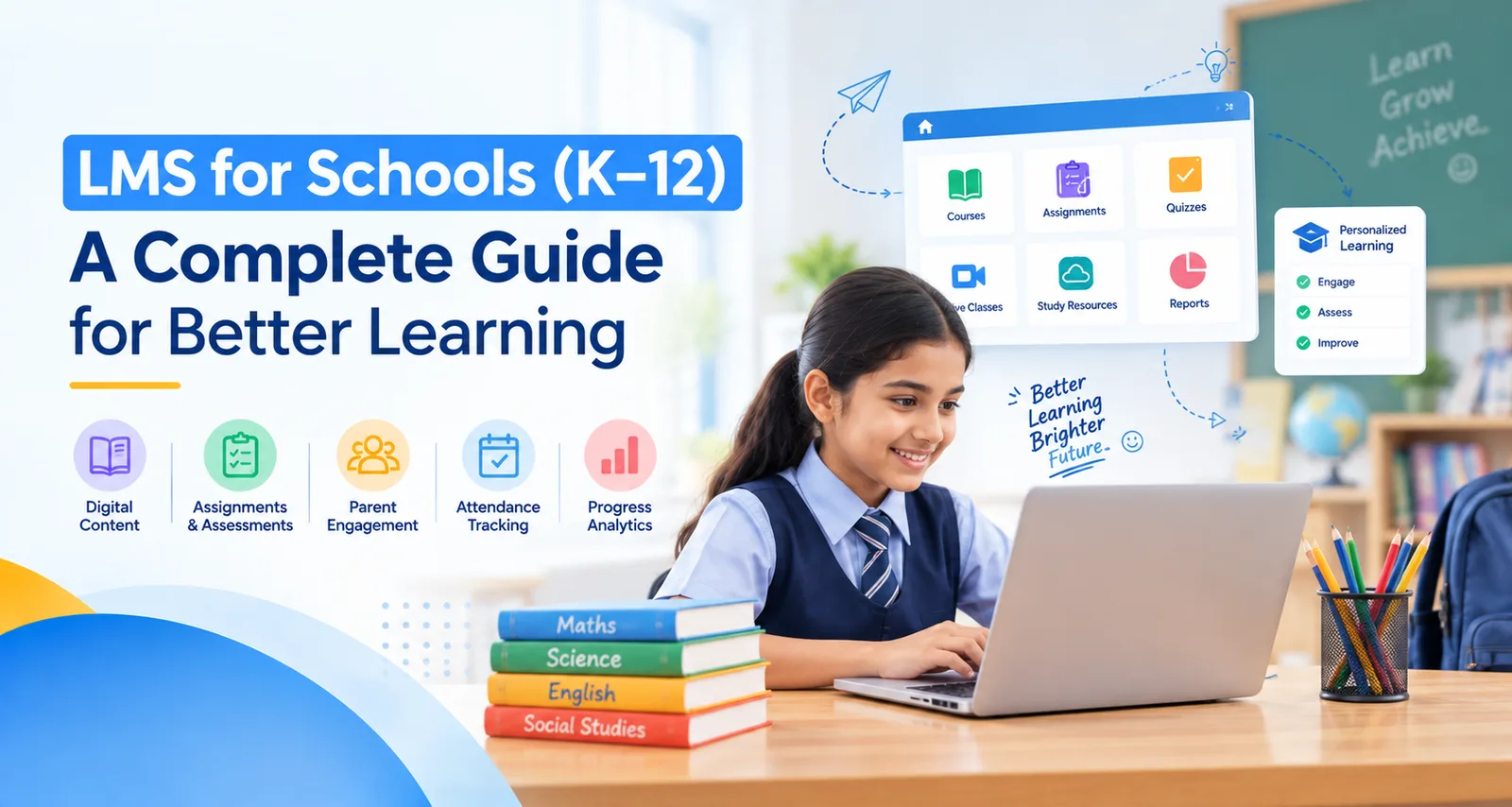
An LMS built for a university and an LMS built for a K-12 school look similar in a sales demo; both have course pages, assignments and a gradebook, but they are solving very different problems for very different users.
The student isn't managing their own learning
A university student logs into an LMS independently. A Class 5 student generally does not need a parent checking homework, and a teacher is assigning it. An LMS for schools needs to be built around that reality: simple enough for a teacher with fifteen minutes between periods to post an assignment, and visible enough that a parent can see it without hunting through menus.
Board alignment matters more than feature count
CBSE, ICSE and state boards each have their own curriculum structure, and increasingly their own digital assessment expectations. An LMS for schools is only as useful as its ability to map content and assessments to the board's actual syllabus, term-wise, rather than presenting a generic subject list that a teacher has to manually reorganize every year.
Teacher time is the real constraint
The single biggest reason school LMS rollouts fail is not the software; it's teacher time. A platform that requires 20 minutes of setup to assign one worksheet will get abandoned within a term, no matter how good its analytics dashboard looks. The features that consistently get used in Indian K-12 schools are the boring ones: uploading a worksheet or video, marking attendance, and sending a quick update to parents; all in as few taps as possible.
Parent communication is not optional
For K-12, an LMS that doesn't reach parents directly through the app, SMS or WhatsApp is missing the feature that matters most to most schools. Parents want to see homework, upcoming tests and attendance without asking their child, and schools want a paper trail of what was communicated and when.
It has to work alongside your school ERP, not instead of it
A school already running an ERP like Sonet's eSSMS has class lists, section allocations and timetables defined once. An LMS for schools that duplicates that setup separately creates exactly the same synchronization headache that plagues disconnected college systems; a student moved to a new section in the ERP but still shows up in the old section's LMS course. This is why Sonet's LMS for schools reads class and section data directly from eSSMS rather than asking a school to define it twice.
A short checklist for school leadership
Can a teacher assign a worksheet in under two minutes, with no training?
Does it map to your board's curriculum, term-wise, out of the box?
Do parents get updates through a channel they'll actually check app, SMS or WhatsApp?
Does it read class, section and student data from your existing school ERP automatically?
Does it work reasonably well on the mobile data speeds your families actually have, including in smaller towns?