
Running a Chain of Schools? Here's Why Group-Wide Automation Matters
By Sonet Microsystems
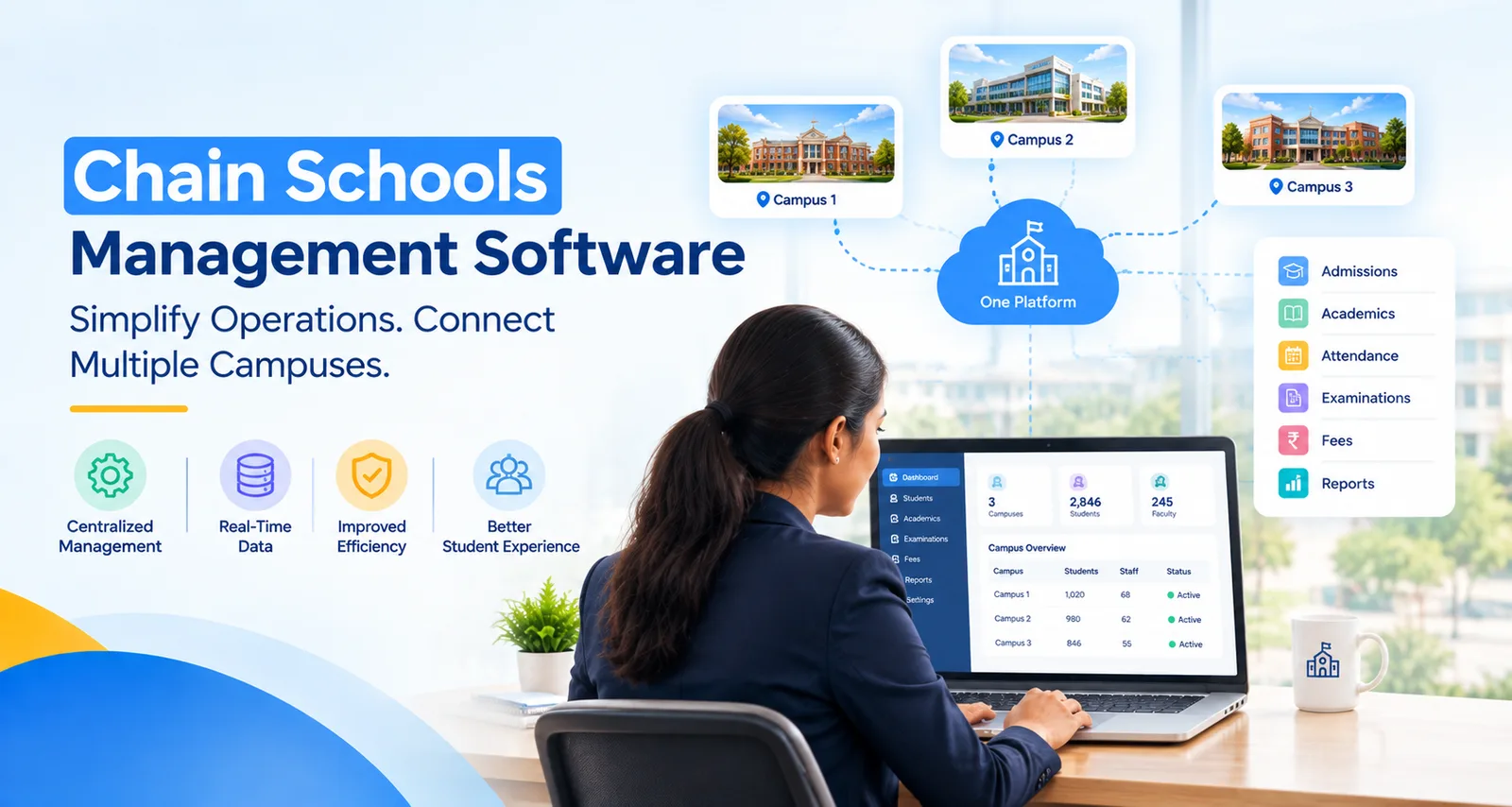
A single school can survive on a mix of spreadsheets, a basic attendance app and a WhatsApp group for parent updates. A chain of schools cannot, not because any one branch is doing anything wrong, but because the moment you're responsible for five, fifty or four hundred branches, "doing anything wrong" happens somewhere, every day, and there is no way to see it happening until it's a serious problem.
The visibility problem is the real problem
Ask a school chain's central office a simple question: "Which branches are behind on this term's fee collection?" and in a chain running per-branch systems, the honest answer is usually "we'd have to call each principal and ask." That delay is the actual cost of not standardizing: not that individual branches can't function, but that the group office has no reliable, real-time view across them.
What group-wide automation actually looks like
A chain schools management platform gives the central office the same operational view for one branch or four hundred:
Consolidated fee and finance reporting across every branch, updated in real time rather than compiled monthly from branch-submitted reports
Standardized admissions workflows, so a parent enquiry at any branch is handled the same way and reported the same way to the group office
Group-wide staff records, useful when teachers transfer between branches or the group is hiring centrally
Branch-level dashboards for principals alongside a roll-up dashboard for the trust or society running the group
Consistent examination and report card formats across branches, even where individual branches previously used different processes
Why "per-branch, best of breed" usually backfires
It's tempting to let each branch principal choose their own software, on the logic that local autonomy produces better local outcomes. In practice, this tends to produce the opposite of a group advantage: branch A's admission data can't be compared to branch B's, a group-wide fee policy has to be manually re-implemented five different ways, and a new branch has to be onboarded from scratch instead of inheriting a working template from the rest of the chain. The economies of scale that justify running a chain in the first place shared processes, shared vendor negotiations, shared reporting disappear at exactly the operational layer where they'd matter most.
What to look for if you're evaluating this for a group
Does the platform support a genuine group hierarchy at the trust/society level, then branch level or is it really a single-school product with branches bolted on?
Can a new branch be onboarded using an existing branch as a template, rather than configured from zero?
Is reporting available at both the branch level and consolidated across the group, in the same system?
Can staff and student transfers between branches happen without re-entering records?
Does the vendor have actual experience supporting multi-branch rollouts, not just single-campus deployments?
Sonet's eSSMS and 360° campus management solutions were built with exactly this hierarchy in mind, from groups running a handful of branches to rollouts spanning several hundred school locations.